The Holdovers Review: A Holiday Gem from Alexander Payne
The Reel Team
7 min read
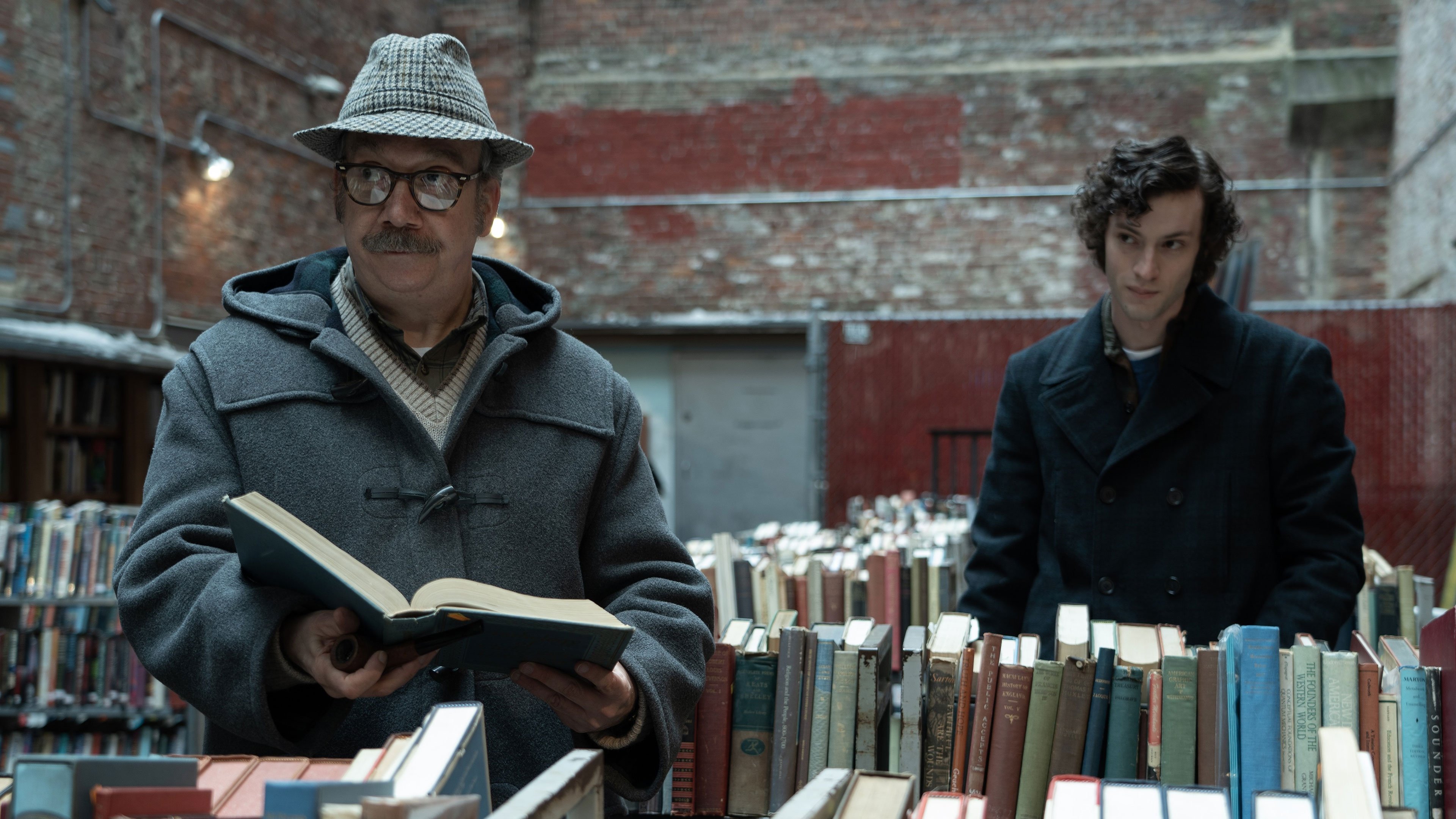
Alexander Payne’s The Holdovers is the rare film that earns its sentimentality. Set over Christmas 1970 at a New England boarding school, it follows three misfits stranded together during the holiday break. What could have been Breakfast Club-lite instead becomes something richer: a film about chosen family, forgiveness, and the difficulty of being kind.
The Setup
Paul Giamatti plays Paul Hunham, a cranky ancient history teacher universally despised by students and colleagues alike. When he’s assigned to supervise the students who can’t go home for Christmas, his legendary grumpiness meets its match in Angus Tully (Dominic Sessa), a troubled student with a chip on his shoulder and nowhere else to be.
Completing the trio is Mary Lamb (Da’Vine Joy Randolph), the school’s head cook, who’s spending her first Christmas after losing her son in Vietnam.
Why It Works
Paul Giamatti’s Performance
Giamatti has spent a career playing variations on unlikable—the schemer in Sideways, the bitter wrestling coach in Win Win. Hunham is his masterwork. The character is genuinely difficult: pompous, pedantic, socially inept, physically repellent (a medical condition gives him a permanent unpleasant smell).
But Payne and Giamatti never let difficulty become caricature. We understand why Hunham became this way. His intelligence wasn’t nurtured; his attempt at academic achievement was sabotaged by privilege. He’s cruel because life has been cruel to him—not an excuse, but an explanation.
When Hunham finally opens up, Giamatti doesn’t reach for easy sentiment. The warmth emerges through cracks in the armor. It’s masterful work.
Da’Vine Joy Randolph’s Quiet Devastation
Mary says little about her son’s death, but Randolph conveys grief in every frame. Her Oscar win was deserved. The performance is all restraint—a woman holding herself together because falling apart isn’t an option.
Her scenes with Angus, particularly, show a woman who’s lost her child connecting with a child who’s essentially lost his family. The parallel is never forced but always present.
Dominic Sessa’s Discovery
Sessa was found through a casting call at his actual boarding school. His naturalness grounds the more theatrical performances around him. Angus could have been a cliché—the wounded rebel—but Sessa finds specificity in every scene.
Payne’s Period Recreation
The film looks like it was actually shot in 1970. Payne and cinematographer Eigil Bryld used vintage lenses and processed the footage to match period film stock. The grain, the color palette, the aspect ratio—everything evokes the era’s cinema rather than its reality.
This isn’t empty nostalgia. The 1970s setting matters: Vietnam’s shadow, economic anxiety, cultural upheaval. The world outside the school’s walls presses in. Mary’s loss isn’t abstract—it’s a consequence of specific historical tragedy.
Earning the Emotion
Christmas movies often fail by demanding emotion rather than earning it. The Holdovers builds slowly. The first act is prickly, genuinely uncomfortable. Hunham and Angus clash; Mary keeps her distance. We’re not sure we like any of them.
By the third act, we care deeply—and the shift happened so gradually we didn’t notice. When the film reaches for sentiment, it’s earned. When Hunham makes his final choice, it’s both surprising and inevitable.
The Payne Touch
Alexander Payne has spent his career finding humanity in difficult people. From Election’s Tracy Flick to Sideways’ Miles to Nebraska’s father and son, his films locate compassion without excusing flaws.
The Holdovers is his warmest film, but it’s not soft. These characters have sharp edges that never fully smooth. The ending is hopeful but not complete—problems aren’t solved, just slightly eased. That restraint makes the warmth feel true.
Minor Complaints
The second act occasionally sags. A field trip to Boston provides necessary plot movement but feels like marking time until the emotional climax.
Some may find the film too gentle, too predictable in its arc. The “difficult people learn to love each other over Christmas” structure is familiar. Payne executes it beautifully, but it’s not reinventing anything.
The Verdict
Rating: 4.5/5 stars
The Holdovers is that rare thing: a genuinely good Christmas movie. Not saccharine, not cynical, just emotionally honest about lonely people finding connection.
Giamatti earned a well-deserved Oscar nomination, though the award went to Cillian Murphy for Oppenheimer. Randolph’s victory was well-earned. The film itself may not take Best Picture, but it will endure in the way that matters—as a movie people return to, especially during holidays when kindness feels possible.
If you’ve felt alone during a holiday season, this film sees you. If you’ve been difficult to love, it sees you too. The Holdovers argues that connection is possible even among the prickly, the grieving, and the lost. That’s a message worth hearing.
If You Liked This
Try these films about found family and unlikely connections:
- The Breakfast Club - The obvious comparison, and Payne knows it
- Harold and Maude - Unlikely friendship across generations
- Nebraska - Payne’s previous exploration of difficult familial love
- Sideways - Giamatti and Payne’s first collaboration
Discover Your Next Favorite Film
Browse our curated collection of movie trailers and find something new to watch tonight.
Browse Trailers