Interstellar: Love Across Dimensions
Films.io Editorial
5 min read

There’s a moment about halfway through Interstellar where Matthew McConaughey’s Cooper watches years of video messages from his children. He’s been gone for what feels like hours to him, but decades have passed on Earth. McConaughey doesn’t say a word. He just sits there, tears streaming down his face, watching his kids grow old without him.
I’ve seen this movie probably six times now, and that scene destroys me every single time.
Christopher Nolan built his reputation on puzzle-box thrillers like Memento and The Prestige. So when he announced he was making a space movie, everyone expected another cerebral exercise in narrative trickery. What we got instead was something far more ambitious: a film that uses wormholes and black holes to tell a story about the one thing that transcends space and time.
The Science That Serves the Story
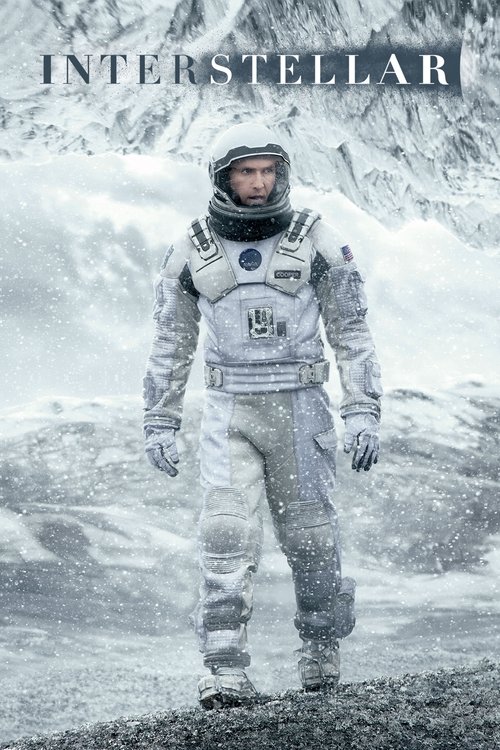
Nolan famously brought in theoretical physicist Kip Thorne as a consultant, and it shows. The black hole Gargantua remains one of the most scientifically accurate depictions ever put on film. The time dilation effects on Miller’s planet aren’t just cool sci-fi concepts; they’re based on actual physics.
But here’s what makes Interstellar special: the science never overwhelms the emotion. When Cooper realizes that every hour on Miller’s planet costs him seven years with his daughter, the math isn’t abstract. You feel it in your gut. The ticking in Hans Zimmer’s score represents actual seconds passing back on Earth. Nolan found a way to make Einstein’s theories hit you right in the heart.
Anne Hathaway Was Right
There’s a scene where Brand (Anne Hathaway) argues that love might be something quantifiable, something that transcends dimensions. Cooper dismisses her as emotional and irrational. Most audiences probably agreed with him on first viewing.
But the ending proves Brand right. Love does transcend dimensions. Cooper’s love for Murph literally allows him to reach across time and space to save humanity. It’s the kind of ending that could have felt cheesy in lesser hands. Nolan earns it by grounding everything in specifics: the watch, the bookshelf, the dust patterns that spell out “STAY.”
What It Gets Wrong (And Why It Doesn’t Matter)
Look, I’m not going to pretend the third act makes complete logical sense. The tesseract sequence raises more questions than it answers. How exactly does love translate into gravitational waves? The film hand-waves this with talk of “they” and fifth-dimensional beings, but it never quite adds up.
You know what? I don’t care. By that point, you’re either on board with what Nolan is doing or you’re not. The emotional logic tracks perfectly, even if the physics gets a bit wobbly.
Zimmer’s Best Work
We need to talk about the organ. Hans Zimmer’s score for Interstellar is built around a massive pipe organ recorded in London’s Temple Church. It gives the whole film this sense of religious awe, like space travel is humanity’s cathedral.
The track “No Time for Caution” during the docking sequence is pure cinema. Your heart rate genuinely increases watching Cooper try to match rotation with the spinning Endurance while Zimmer’s score pounds in your ears. It’s the kind of scene that reminds you why we go to movie theaters.
A Film About Parenthood
Strip away all the black holes and wormholes, and Interstellar is really about one thing: a father trying to get back to his daughter. Cooper makes an impossible choice at the beginning, leaving his kids to save humanity. The whole movie is about whether that choice was worth it.
The casting of Jessica Chastain as the adult Murph was inspired. She brings this mix of brilliance and barely suppressed rage that makes her confrontation with Murphy’s ghost (Cooper in the tesseract) so powerful. When she finally understands what her father sacrificed, you understand too.
The Ending That Earned Its Tears
Some people find the ending too sentimental. Cooper reunites with the elderly Murph, then sets off to find Brand on Edmund’s planet. It’s unabashedly hopeful.
But Nolan earned that hope. He put us through two hours and forty-nine minutes of tension, loss, sacrifice, and heartbreak. By the time Cooper holds his daughter’s hand one last time, we need that catharsis. The film would feel incomplete without it.
Interstellar isn’t Nolan’s most technically perfect film. That’s probably still The Dark Knight or Dunkirk. But it might be his most human one. In trying to depict the vastness of space, he ended up making his most intimate story yet.
Sometimes the simplest ideas are the truest: love is the one thing that transcends time and space. Interstellar just happens to prove it with wormholes.
For more Nolan, read our take on Oppenheimer. Explore more sci-fi in our collection.
Discover Your Next Favorite Film
Browse our curated collection of movie trailers and find something new to watch tonight.
Browse Trailers