Killers of the Flower Moon Review: Scorsese's American Tragedy
A three-hour epic about the Osage murders that demands witness
The Reel
9 min read
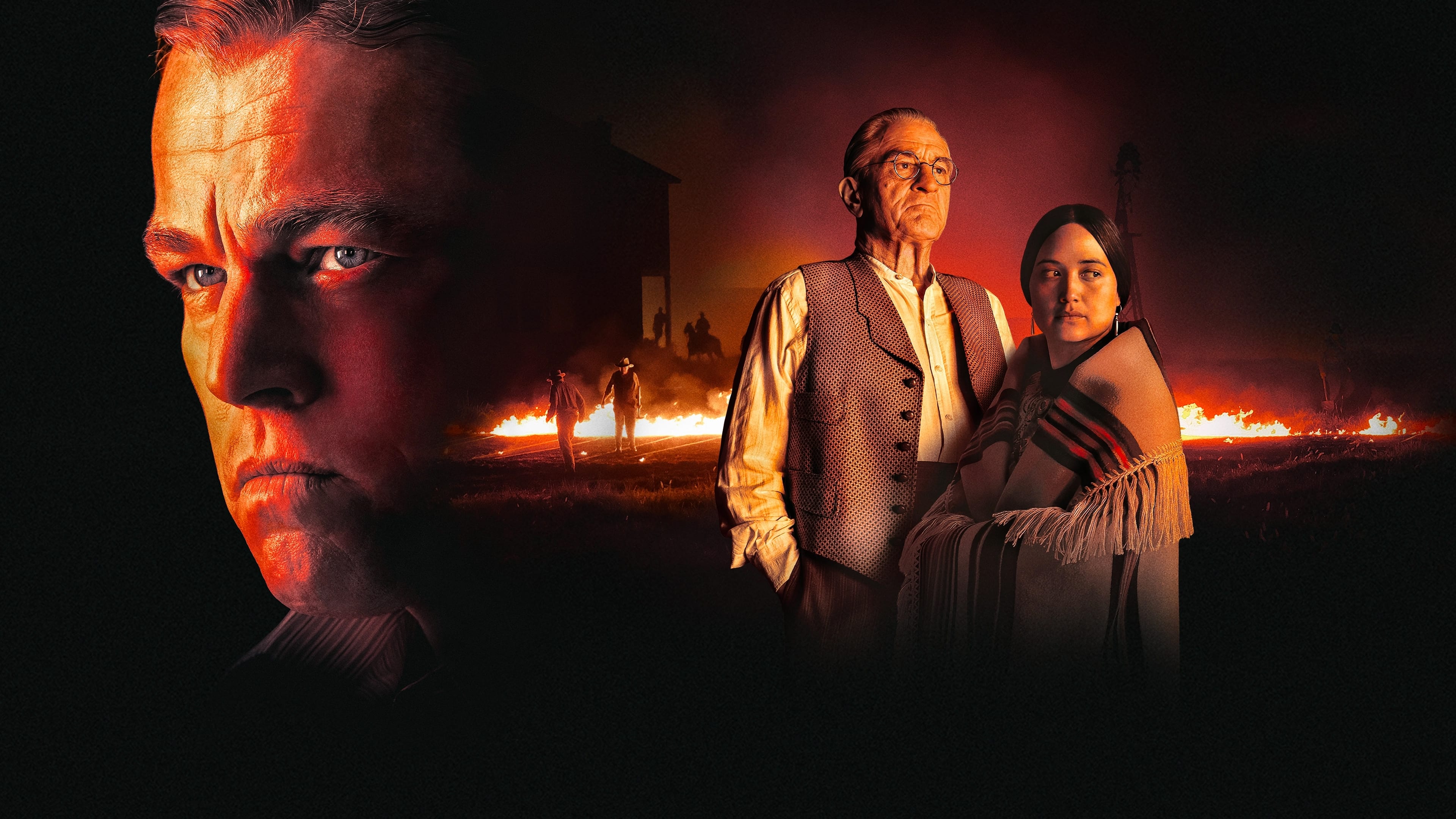
Martin Scorsese’s Killers of the Flower Moon runs three hours and twenty-six minutes. It needs every one of them. This is not a film to be consumed but to be endured, in the way we must endure history’s horrors to understand them.
The Osage murders of the 1920s represent one of America’s most shameful chapters. Scorsese refuses to let us look away.
The Historical Context
When oil was discovered beneath Osage Nation land in Oklahoma, the tribe became the wealthiest people per capita in the world. White America responded predictably: with laws restricting Osage financial autonomy and a systematic campaign of murder.
The “Reign of Terror” killed dozens, perhaps hundreds, of Osage people. White men married Osage women, then arranged their deaths to inherit their headrights. It was genocide by capitalism, enabled by a legal system designed to dispossess.
Scorsese’s Approach
Rather than tell this story from the FBI’s perspective, as David Grann’s source book largely does, Scorsese focuses on the perpetrators. We spend the film with Ernest Burkhart (Leonardo DiCaprio) and his uncle William Hale (Robert De Niro) as they orchestrate murders.
This choice is uncomfortable by design. We understand how ordinary men rationalize atrocity. Ernest isn’t a monster; he’s weak, greedy, and loved by a woman he helps destroy. His complicity is more chilling than pure evil would be.
Leonardo DiCaprio’s Ernest
DiCaprio plays against his natural charisma, finding Ernest’s essential mediocrity. This man isn’t bright enough to orchestrate the conspiracy or moral enough to resist it. He follows orders, collects rewards, and tells himself lies.
His scenes with Lily Gladstone’s Mollie are the film’s heart. He seems to genuinely love her, even as he poisons her. The human capacity for compartmentalization is terrifying.
Lily Gladstone’s Mollie
Gladstone gives a performance of devastating restraint. Mollie knows something is wrong. She watches her family die one by one. She suspects her husband but can’t fully accept the truth.
The film grants her subjectivity in ways Hollywood rarely extends to indigenous characters. We see Osage ceremonies, hear the Osage language, understand that this community had rich life before and despite colonization.
Gladstone’s Best Actress nomination was historic, the first for a Native American performer. Her work here justifies it entirely.
De Niro’s Hale
Robert De Niro’s William Hale is American evil incarnate. He calls the Osage his friends. He donates to their churches. He attends their funerals for victims he ordered killed. He believes himself a good man.
De Niro and Scorsese have collaborated for fifty years, and this might be their most complex work together. Hale isn’t a crime boss reveling in power. He’s a community leader whose crimes are indistinguishable from normal business.
The Length
Three and a half hours is a lot. Scorsese uses the time to slow us down, to force us to sit with what we’re watching. Quick cuts would let us process these events as entertainment. The deliberate pace denies that comfort.
The length also establishes repetition. Murder after murder, each rationalized, each forgotten. The horror compounds. By the end, we understand this wasn’t a crime spree but a system.
Historical Accuracy vs. Narrative
Scorsese compresses and combines events, as historical films must. Some characters are composites. Some timelines shift. The emotional truth remains intact.
The film’s most powerful deviation is its ending. Rather than a conventional resolution, Scorsese appears in a contemporary true-crime radio dramatization, acknowledging how we package tragedy for consumption. It’s a Brechtian rupture that implicates the audience.
The FBI Problem
The Bureau of Investigation (not yet FBI) did eventually investigate, and Tom White (Jesse Plemons) leads that effort in the film’s final act. Scorsese treats this carefully, neither celebrating federal intervention nor ignoring it.
White is competent and decent, but his investigation comes too late and catches only some perpetrators. Justice, such as it is, is partial. The Osage murders weren’t fully solved; they were incompletely addressed, then largely forgotten.
Why This Matters Now
Killers of the Flower Moon arrives as indigenous rights remain contested, as resource extraction continues on native land, as the legal structures that enabled the murders persist in modified forms.
Scorsese doesn’t draw explicit contemporary parallels. He doesn’t need to. The film trusts viewers to recognize continuities between 1920s Oklahoma and present-day America.
Scorsese’s Late Career
At 80, Scorsese continues making films that challenge and provoke. Killers of the Flower Moon joins The Irishman in his late-period examination of American violence and American forgetting.
These aren’t the propulsive crime films of his youth. They’re elegies, mournful and long, asking audiences to reckon with histories we’d rather ignore.
Final Thoughts
Killers of the Flower Moon is not an easy watch. It’s not meant to be. Scorsese has made a film that honors victims by refusing to soften what happened to them.
The Osage people consulted on the production and supported its release. Their participation legitimizes Scorsese’s approach: this story needed telling, and telling it required showing the perpetrators as they were, human and monstrous simultaneously.
For more Scorsese films, explore our Martin Scorsese retrospective and browse our drama collection.
Discover Your Next Favorite Film
Browse our curated collection of movie trailers and find something new to watch tonight.
Browse Trailers