15 Years Later: Why The Dark Knight Still Defines the Superhero Genre
Heath Ledger's Joker, practical chaos, and the film that proved comic book movies could be cinema
The Reel
9 min read
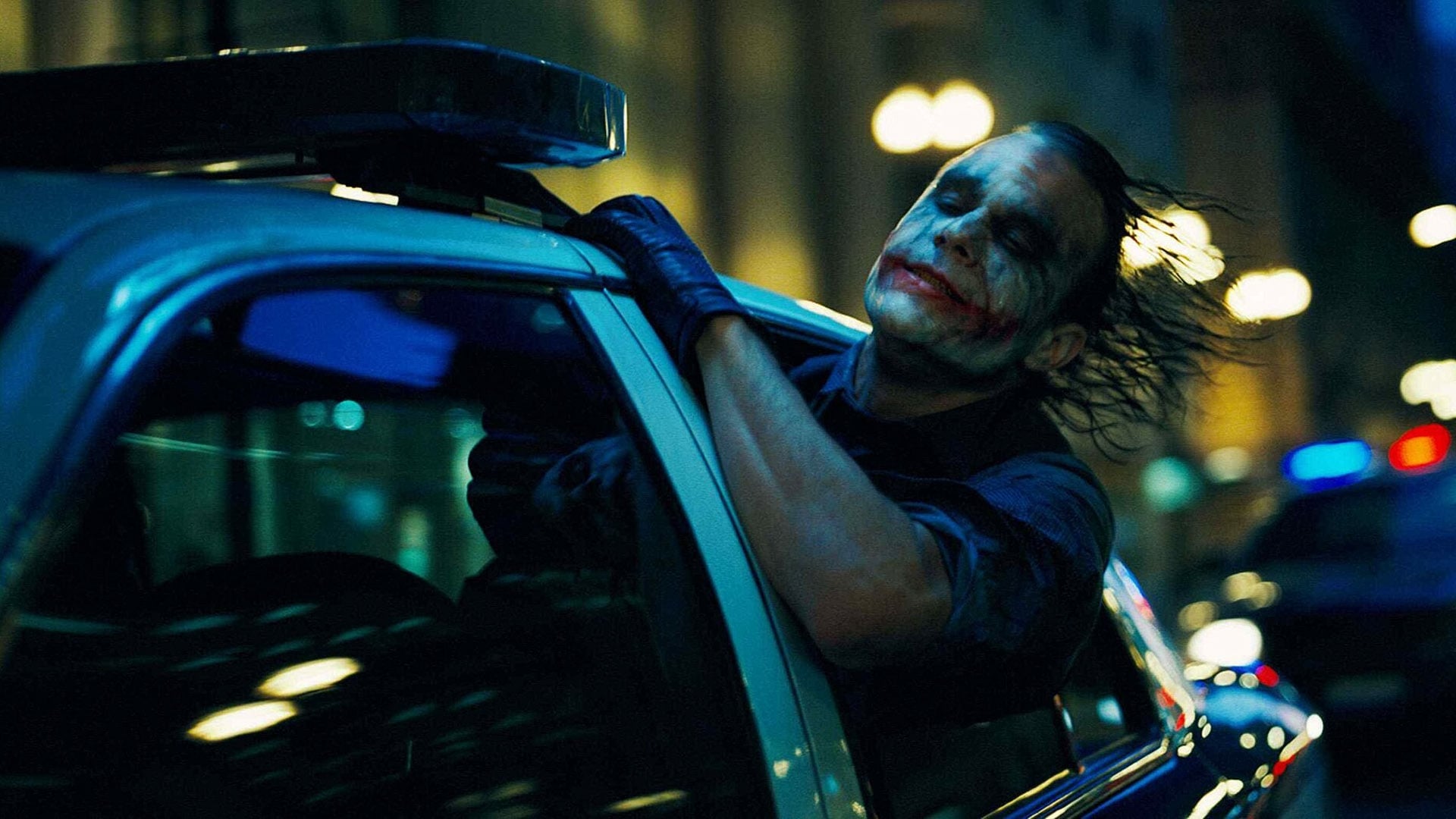
It opens with a bank robbery. No setup, no exposition. Just six men in clown masks systematically betraying each other while the Joker picks them off one by one. By the time the school bus drives through the bank’s wall and the Joker reveals himself, you’ve already seen the entire film’s thesis: chaos is patient, chaos has a plan, and chaos always wins.
Fifteen years after its release, The Dark Knight remains the benchmark against which all superhero films are measured. Most fall short. That’s not failure; that’s just reality. Christopher Nolan made something that transcends its genre, much like he would later do with Interstellar and Oppenheimer. A crime epic that happens to feature a man in a bat costume.
The Summer of 2008
To understand The Dark Knight’s impact, you have to remember what superhero movies looked like before it. Spider-Man 3 had just disappointed everyone. X-Men: The Last Stand had killed the franchise. The MCU was a single film old. Comic book movies were entertainment, not art.
Then Nolan’s sequel arrived and changed the conversation entirely.
The box office tells part of the story: over $1 billion worldwide, the fourth film ever to reach that milestone. But the numbers don’t capture the cultural moment. Midnight showings sold out weeks in advance, audiences applauding the Joker’s every appearance, Roger Ebert calling it “a haunted film that leaps beyond its origins and becomes an engrossing tragedy.”
For perhaps the first time, a superhero movie was being discussed as serious cinema. The Academy would eventually give Heath Ledger a posthumous Oscar, but the film itself narrowly missed a Best Picture nomination. A snub that prompted the Academy to expand the category the following year.
Heath Ledger’s Impossible Performance
We should talk about Heath Ledger. We have to.
The facts are well-known: Ledger isolated himself for weeks, developing the character in a hotel room. He kept a diary of disturbing images and ideas. He couldn’t sleep during filming, his mind unable to let go of the Joker’s chaos. Four months before the film’s release, he died of an accidental overdose.
The mythology threatens to overshadow the performance itself. That would be a tragedy, because the performance is extraordinary on its own terms. Not because of what happened after but because of what’s on screen.
Ledger’s Joker is constantly in motion, licking his lips, rolling his neck, shifting weight from foot to foot. He seems genuinely unpredictable, even to himself. Watch his reaction when Rachel Dawes slaps him: a moment of surprise, then delight, then something darker. You can see him deciding, in real-time, whether to kill her.
The voice came from Tom Waits and ventriloquist dummies. The makeup, according to Ledger, was self-applied. The Joker would do it himself, badly. Every choice feels specific and strange and inevitable.
The Philosophy of Chaos
Superhero villains typically want something concrete: money, power, revenge. The Joker wants something more abstract and more terrifying. He wants to prove a point.
“I’m not a monster,” he tells Batman. “I’m just ahead of the curve.”
His argument is simple: civilization is a lie, morality is a costume, and everyone will abandon their principles when sufficiently pressured. The ferry experiment near the film’s end is his thesis defense. Two boats, two detonators, the assumption that ordinary people will kill each other to survive.
They don’t. The convict throws his detonator out the window. The civilians vote but can’t pull the trigger. In the film’s most hopeful moment, the Joker is proven wrong.
But only partially. Because Harvey Dent, Gotham’s White Knight and its best hope for legitimate justice, breaks. The Joker’s real target was never the ferries; it was always Dent. Kill the symbol, kill the hope.
Batman as Tragedy
In all the discussion of Ledger’s Joker, Christian Bale’s Bruce Wayne sometimes gets overlooked. That’s a mistake. This is the most psychologically complex Batman ever committed to screen.
Bale plays Bruce as a man in constant pain. Not physical pain (though there’s plenty of that) but the existential agony of someone who knows he’s making things worse and can’t stop. The Joker exists because of Batman. Harvey Dent falls because of Batman. Rachel dies because of Batman.
The film’s ending isn’t triumph; it’s sacrifice that looks like defeat. Batman takes the blame for Dent’s murders, becoming a villain so that Dent can remain a symbol. “Sometimes the truth isn’t good enough,” he tells Gordon. “Sometimes people deserve more.”
It’s a fundamentally broken philosophy, maintaining a lie to protect hope, and the sequel would eventually tear it apart. But in this moment, it feels like the only choice left. Batman runs into the night, hounded by dogs and helicopters, having saved Gotham by destroying himself.
Practical Chaos
Nolan’s commitment to practical filmmaking gives The Dark Knight a weight that CGI can’t replicate. It’s the same approach he’d bring to Dunkirk years later, and it’s why his films hold up on rewatch in a way that CGI-heavy movies don’t. When the Joker blows up Gotham General Hospital, that’s a real building being demolished. When an eighteen-wheeler flips end over end, that’s actual physics. When Batman dives off a skyscraper in Hong Kong, that’s a stuntman in freefall.
The centerpiece is the Chicago street sequence: Batman on his motorcycle, the Joker in a semi, civilian cars caught between them. Nolan filmed it over five nights on actual downtown streets. The tension is palpable because it’s real. Real vehicles, real speeds, real danger.
Even the quieter scenes benefit from practical grounding. The interrogation between Batman and the Joker uses harsh fluorescent lighting and a single room, trusting the actors entirely. No flash cuts, no digital enhancement. Just Ledger and Bale in a room, creating the definitive confrontation between order and chaos.
The Sound of Chaos
Hans Zimmer and James Newton Howard’s score deserves its own essay. The Joker’s theme is essentially two notes: a sustained, rising violin scrape that sounds like a blade against string. It’s less music than sound design, creating visceral unease without melody.
Compare it to Batman’s four-note motif, heroic but mournful. As the film progresses, the Joker’s theme begins to intrude on Batman’s scenes, the chaos bleeding into the order. By the ending, they’re almost indistinguishable.
The score was partly inspired by Zimmer attending a Meshuggah concert and wanting to capture that feeling of relentless, mechanical aggression. It worked. Fifteen years later, that razor-wire violin still makes audiences lean forward in their seats.
The Legacy
Every superhero film since 2008 exists in The Dark Knight’s shadow. Some have tried to replicate its darkness (Man of Steel, Batman v Superman). Some have deliberately gone lighter (Thor: Ragnarok, Guardians of the Galaxy). Even the recent Spider-Verse films owe something to its proof that superhero stories could be art. None have matched its synthesis of blockbuster spectacle and thematic depth.
The film proved that comic book movies could be about something. Not just adventure, not just heroism, but ideas about civilization and chaos, about the lies we tell to maintain order, about the cost of being the person everyone needs you to be. It’s the kind of drama that transcends genre labels.
Most importantly, it proved that audiences wanted this. They didn’t just want entertainment; they wanted art. They wanted to leave the theater thinking, arguing, processing. The Dark Knight trusted them to handle complexity, and they rewarded that trust with the biggest opening weekend in history.
Still the Standard
Fifteen years on, The Dark Knight remains unmatched. Not because no one has tried to beat it (they have, constantly) but because its particular alchemy can’t be replicated. Nolan’s obsessive preparation. Ledger’s transformative commitment. The exact moment in cultural history when audiences were ready for superhero stories to grow up.
It’s a film about terrorism and surveillance, about the seductive simplicity of authoritarianism, about the hard work of maintaining civilization. It’s also a film about a billionaire in a bat costume fighting a clown. That it makes both of these things feel equally real and equally urgent is its greatest achievement.
Why so serious? Because sometimes seriousness is exactly what we need.
Rating: 10/10
The Dark Knight is available on most streaming platforms. It’s even better in IMAX. Browse our full collection for more essential cinema.
Discover Your Next Favorite Film
Browse our curated collection of movie trailers and find something new to watch tonight.
Browse Trailers