How Spider-Verse Changed Animation Forever
From rejected pitch to Oscar winner, the visual revolution that proved animated films could be art
The Reel
8 min read
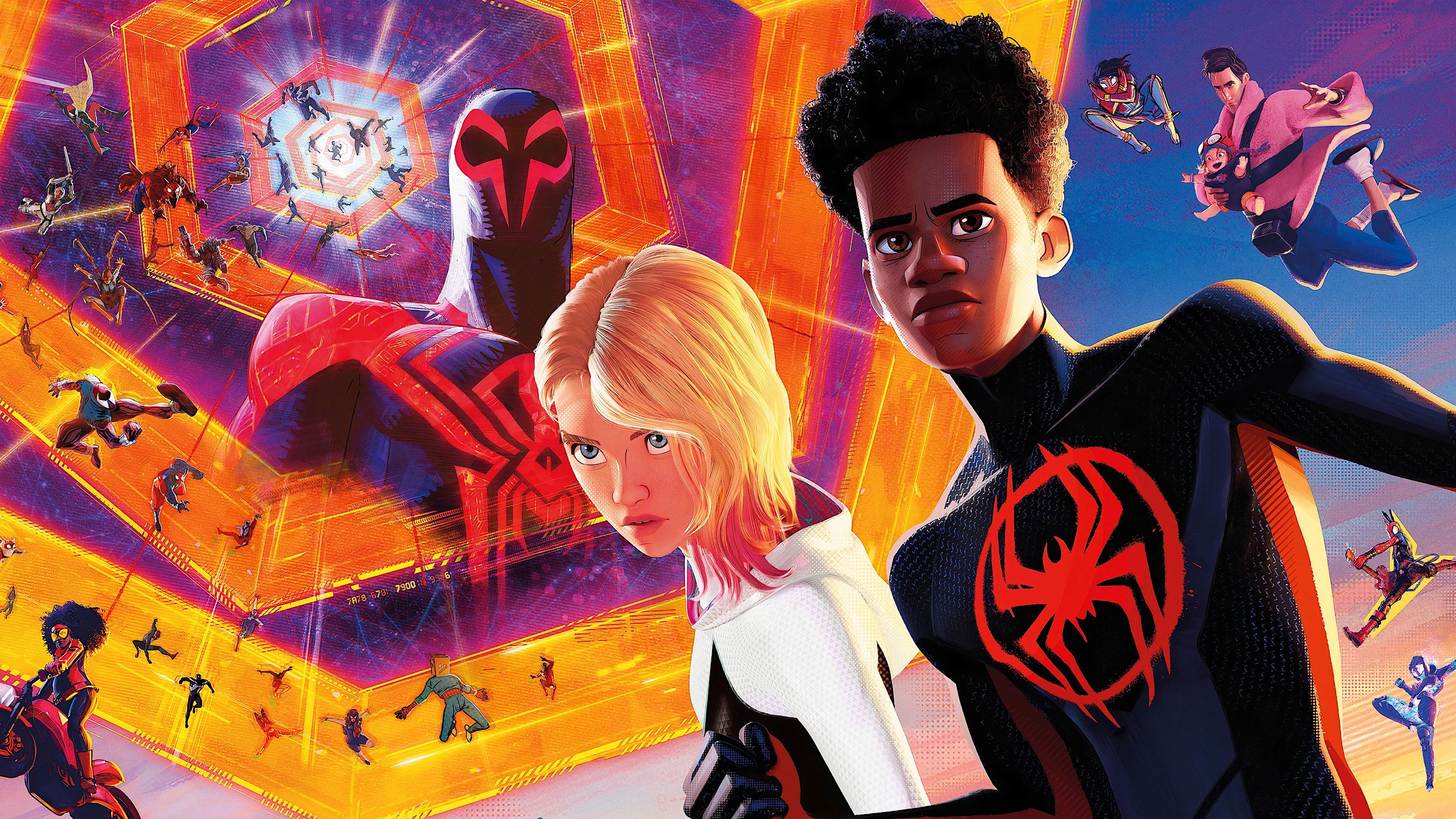
Before Spider-Man: Into the Spider-Verse, the rules of mainstream animated films were clear. Smooth motion. Consistent frame rates. Realistic physics. Studios like Pixar had perfected this formula with films like WALL·E and Coco. The goal was always to make animation look more like live-action, to sand away any reminder that what you were watching was, well, animated.
Then Phil Lord, Christopher Miller, and a team of mad genius artists asked a dangerous question: what if the goal wasn’t to hide the animation but to celebrate it?
The result didn’t just win an Oscar. It permanently fractured what we thought was possible.
The Impossible Pitch
Sony Pictures Animation was struggling. Their films were profitable but unremarkable. Functional but forgettable. The Emoji Movie had just cratered their credibility. They needed something different.
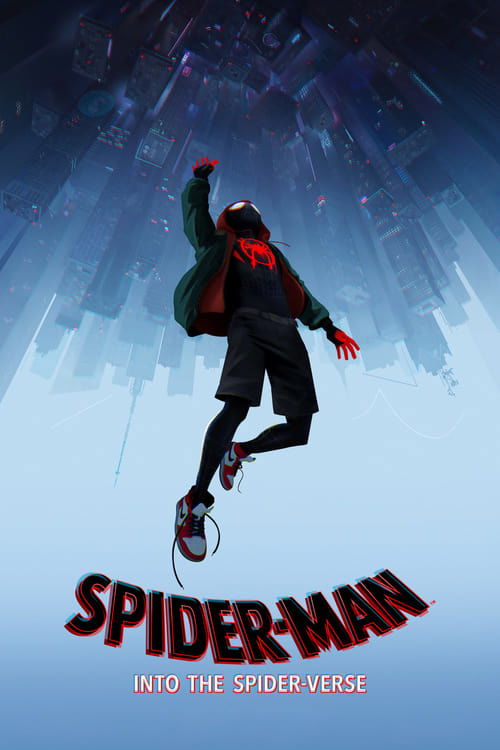
Enter Phil Lord and Christopher Miller, fresh off The Lego Movie, with a pitch that made executives nervous: a Spider-Man film where the animation itself would feel like a comic book come to life. Variable frame rates. Visible printing artifacts. Hand-drawn effects over CGI. Multiple art styles clashing in the same frame.
“The studio was terrified,” one animator later recalled. “They kept asking if we could have a ‘normal’ backup version ready.”
There was no backup version. The filmmakers bet everything on their vision.
The Frame Rate Revolution
Traditional animation runs at 24 frames per second, with computer animation typically animating every frame for smooth motion. Spider-Verse introduced “animating on twos,” moving characters only every other frame, creating a slightly staccato effect that recalls hand-drawn animation.
But here’s where it gets interesting: not everything is on twos. Background characters might animate on fours. Emotional moments might briefly go to ones. Action sequences mix frame rates within the same shot, guiding your eye without you consciously noticing.
The effect is subliminal but powerful. The animation feels more intentional, more considered. Every movement a choice rather than a simulation. Characters pop against their backgrounds in a way that smooth animation never achieves.
The Line Work
Look closely at Spider-Verse and you’ll see something unprecedented: visible line art over the CGI renders. Character outlines, impact frames, motion lines. All added by hand, frame by frame, over computer-generated imagery.
The team called them “stylization keyframes.” Certain moments would get fully hand-drawn overlays, introducing a raw, expressive quality that pure CGI can’t replicate. When Miles punches an enemy, you see comic book impact stars. When he swings through the city, motion lines streak behind him.
These effects change between Spider-People. Peter B. Parker gets classic comic styling. Gwen Stacy exists in watercolor washes. Spider-Man Noir is literal black and white. Peni Parker is anime. Spider-Ham is Looney Tunes.
Each style is internally consistent, but they all share the screen together. A visual argument that different doesn’t mean incompatible.
Miles Morales Finally Gets His Movie
Beyond the technical innovations, Spider-Verse succeeds because it tells a genuinely moving story. Miles Morales was created by Brian Michael Bendis and Sara Pichelli in 2011, but he’d never headlined a major film. Spider-Verse changes that with confidence and style.
Shameik Moore voices Miles with perfect teenage uncertainty. Desperate to be cool, terrified of failure, crushing on a girl who’s definitely out of his league. The Brooklyn details feel authentic: the sneaker culture, the bodega owners, the mix of Spanish and English, the pressure of being a Black Latino kid at a prestigious school.
Miles’s journey isn’t just about getting powers. It’s about finding his own style in a world that keeps offering him other people’s templates. When he finally takes the leap of faith, falling upward toward the camera in the film’s signature shot, it earns a response beyond the technical marvel. We’ve watched him earn this.
The Leap Expands: Across the Spider-Verse
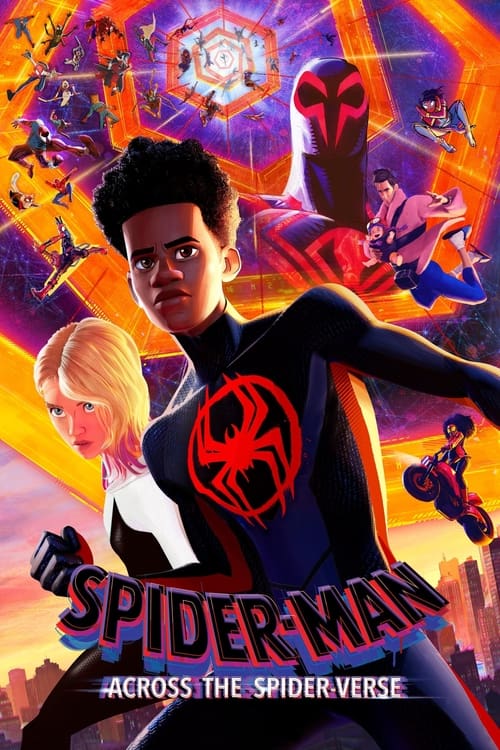
Across the Spider-Verse doesn’t just continue the original’s innovations; it accelerates them into something almost overwhelming. Each universe Miles visits has its own complete aesthetic: Gwen’s watercolor world bleeds emotions into the backgrounds, Mumbattan exists in Bollywood-inspired splendor, and the Society headquarters represents every Spider-variant simultaneously.
The animation team created what they called “impressionistic rendering.” The idea that how something looks should reflect how it feels. Gwen’s world shifts colors with her emotional state. Mumbattan’s perspective warps during action scenes like an Indian miniature painting come to life. Earth-42’s Miles exists in something closer to photoreal noir.
If the first film proved you could break animation’s rules, the sequel proves there are no rules anymore. Every frame could be printed and hung on a wall. Every second introduces visual ideas that would take other studios years to develop.
The Industry Response
The impact on animation has been immediate and ongoing. Pixar and Disney have begun incorporating more stylized elements. Netflix’s Arcane pushed painterly aesthetics to new extremes. Sony’s own The Mitchells vs. the Machines applied similar principles to a different genre.
More importantly, Spider-Verse gave permission. Studios are greenlighting visually ambitious projects that would have been dismissed as “too weird” a decade ago. Films like Everything Everywhere All at Once owe something to Spider-Verse’s proof that audiences will embrace challenging aesthetics if the story earns it.
“The Spider-Verse films didn’t just change what animation could look like,” one industry animator noted. “They changed what studios believe audiences will accept. That’s the real revolution.”
Beyond Technical Achievement
It would be easy to talk about Spider-Verse purely in terms of innovation: the frame rates, the line work, the mixed media. But all that technical ambition serves something more fundamental. The films feel like love letters to the medium.
Every visual choice expresses emotion. The halftone dots aren’t just comic book tribute; they create texture that makes the digital feel handmade. The variable frame rates don’t just look cool; they give the animation room to breathe, to let moments land with appropriate weight.
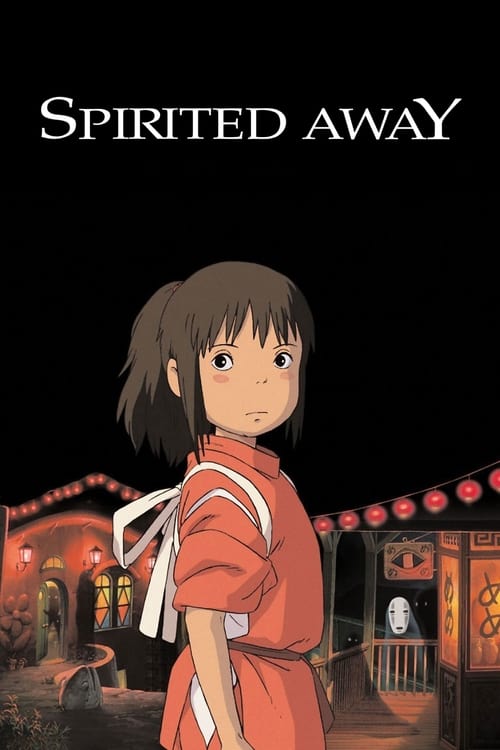
This is what the best animation has always done: used the limitless canvas of the form to express things live-action can’t. It’s why Spirited Away remains a masterpiece decades later. Spider-Verse just reminded everyone that the canvas is bigger than we thought.
A New Standard
Spider-Man: Into the Spider-Verse and Across the Spider-Verse aren’t just great animated films. They’re statements of possibility. Proof that mainstream animation can be experimental, challenging, and visually dense while still connecting with massive audiences.
The story they tell is ultimately simple: a kid from Brooklyn learns to trust himself. What makes it transcendent is how they tell it. With such obvious love for the medium, such willingness to try things that might not work, such confidence that audiences will rise to meet ambitious art.
The Spider-Verse doesn’t just look different. It sees differently. And it’s changed how we see animation forever.
Rating: Into the Spider-Verse 10/10, Across the Spider-Verse 9.5/10
Both films are available now. Watch them on the biggest screen you can find. You’ll want to pause on every frame. Explore more animation in our collection.
Discover Your Next Favorite Film
Browse our curated collection of movie trailers and find something new to watch tonight.
Browse Trailers