Inception vs Tenet: Which Christopher Nolan Mind-Bender Is Better?
The Reel Team
8 min read
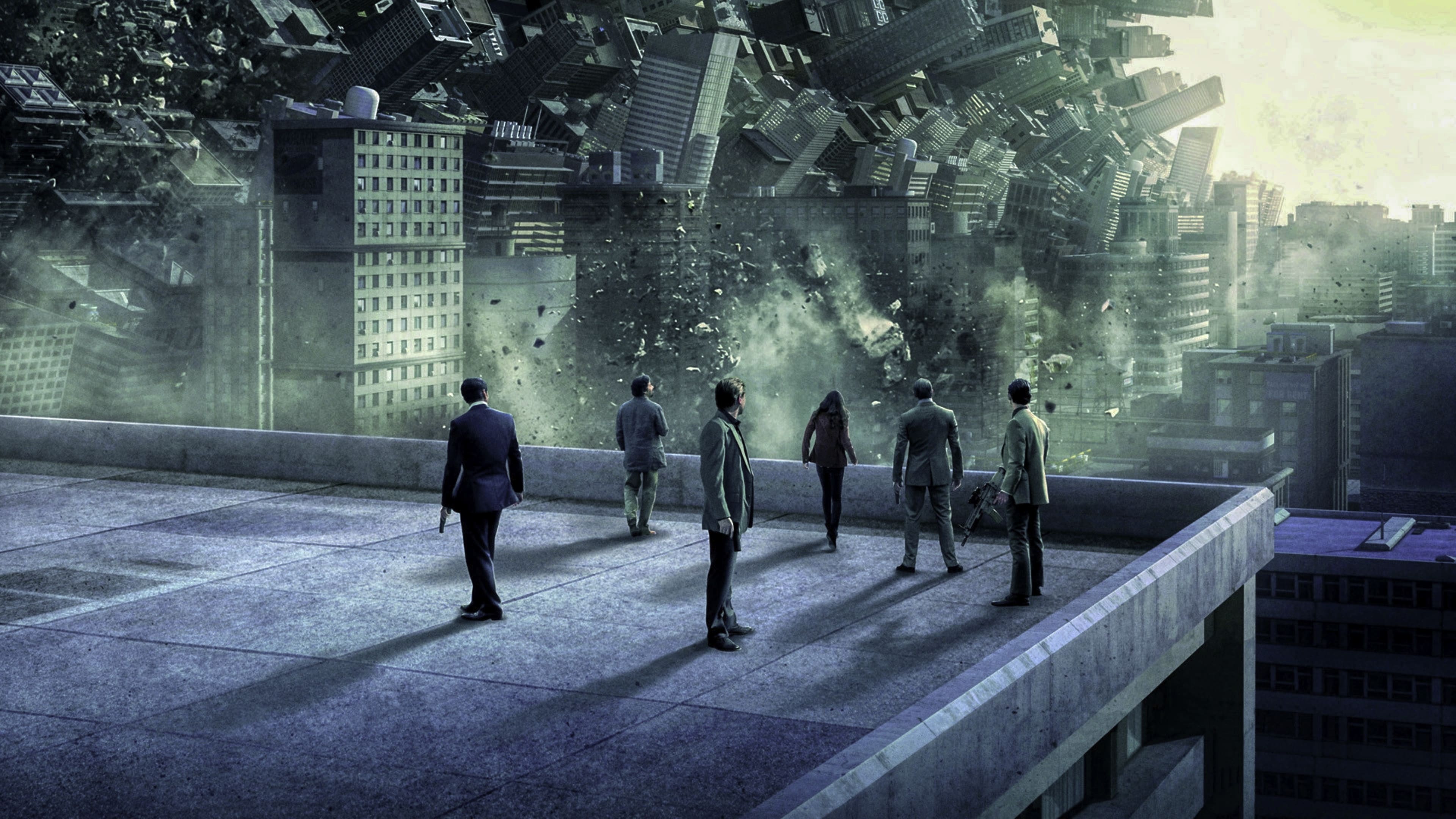
Christopher Nolan has built a career on films that demand multiple viewings, but two stand above the rest in terms of sheer complexity: Inception and Tenet. Both explore unconventional relationships with time, both feature stunning practical effects, and both have sparked endless online debates about their plots. But which one truly succeeds as a film?
The High Concepts
Inception’s premise is elegantly explained: thieves enter dreams to steal secrets, and now they must plant an idea instead. The rules are clear—dreams within dreams, kicks to wake up, limbo as the danger zone. You understand the stakes even if you lose track of which level you’re on.
Tenet’s concept of “inversion”—objects and people moving backward through time—is deliberately more opaque. Nolan wants you to feel the disorientation his protagonist experiences. “Don’t try to understand it. Feel it,” a character advises, which has become either a clever thematic statement or a cop-out, depending on who you ask.
Edge: Inception. There’s a difference between complex and confusing. Inception is complex; Tenet often crosses into confusing.
Character Investment
This is where the films diverge most dramatically.
Inception gives us Cobb, a man haunted by guilt over his wife’s death, desperate to return to his children. Every scene carries emotional weight. When Cobb finally sees his children’s faces, you feel the release of tension that’s been building for two and a half hours.
Tenet’s Protagonist (literally unnamed) is a cipher by design. John David Washington brings charisma to the role, but we know almost nothing about who this man is beyond his competence. The film’s emotional core—a woman’s relationship with her abusive husband—feels grafted on rather than organic.
Edge: Inception, by a mile. You can’t have stakes without characters you care about.
Visual Innovation
Both films showcase Nolan’s commitment to practical effects over CGI.
Inception gave us the rotating hallway fight, the folding Paris cityscape, and the zero-gravity hotel sequence. These images have become iconic, instantly recognizable.
Tenet’s car chase with vehicles moving both forward and backward through time, the airport heist shot from two temporal perspectives, and the final “temporal pincer movement” battle are equally ambitious. The scene where a building un-explodes is genuinely jaw-dropping.
Edge: Tie. Both films deliver imagery you’ve never seen before.
Rewatchability
Here’s where things get interesting.
Inception reveals new details on rewatch—the wedding ring as a totem indicator, subtle foreshadowing in dialogue, the ambiguity of the ending. But the film works perfectly on first viewing.
Tenet almost requires multiple viewings to understand. The first watch can be exhausting as you struggle to follow the mechanics. Subsequent watches are more enjoyable once you’ve mapped the timeline.
Edge: Inception. A film that needs multiple viewings to be appreciated isn’t the same as a film that rewards multiple viewings.
The Score
Inception features Hans Zimmer’s thunderous score, while Tenet was scored by Ludwig Göransson.
Inception’s “Time” has become one of the most recognized film scores of the 21st century. The building brass, the emotional swells—it perfectly captures the film’s themes of memory and loss.
Tenet’s score is intentionally dissonant and percussive, matching the film’s abrasive editing style. It’s effective but not memorable in the same way.
Edge: Inception, though this is partly due to the emotional resonance the music accompanies.
The Dialogue Problem
Nolan has always prioritized exposition, but Tenet takes this to extremes. Characters spend enormous amounts of screen time explaining the mechanics of inversion, often while important plot points happen in the background. Combined with the film’s notorious sound mixing (where dialogue is frequently buried beneath score and effects), following the plot becomes genuinely difficult.
Inception also has extensive exposition, but it’s delivered through elegant sequences like the café scene with Ariadne, where we learn the rules as she does. The dream-sharing training feels like discovery rather than lecture.
Edge: Inception. Show, don’t tell—especially if we can’t hear the telling.
Ambition vs. Execution
Tenet is arguably more ambitious. It attempts to depict something truly unprecedented: the experience of moving backward through time while the world moves forward. The logistics of filming this—actually reversing cars, explosions, and fight choreography—are staggering.
But ambition only matters if the execution lands. Interstellar is equally ambitious and delivers emotional payoffs. The Prestige is intricate and satisfying. Dunkirk experiments with time and creates visceral tension. Tenet’s ambition sometimes seems to exist for its own sake.
Edge: Inception. Execution trumps ambition.
The Verdict
Inception is the better film. Not because it’s simpler—it’s plenty complex—but because it never loses sight of why complexity matters. Every layer of dreams, every ticking clock, every repeated rule exists to serve the story of a man trying to get home to his children.
Tenet is a technical marvel and a fascinating experiment. It’s worth watching, and those who love it make compelling arguments. But when a film’s most passionate defenders spend more time explaining it than praising it, that tells you something.
Both films showcase Nolan at his most ambitious. But Inception proves that blockbuster filmmaking can be both intellectually stimulating and emotionally devastating. Tenet proves that Nolan can film things no one has filmed before. Only one of those achievements makes for a great film.
If You Loved Inception
Try these mind-bending films:
- The Prestige - Nolan’s other puzzle-box masterpiece
- Memento - Where Nolan’s timeline experiments began
- Shutter Island - Dream-like psychological thriller
- The Matrix - Reality-questioning sci-fi action
If You Loved Tenet
Explore these time-bending films:
- Arrival - Time experienced non-linearly
- Primer - The most complex time travel film ever made
- 12 Monkeys - Time travel and fate
- Looper - Action-oriented time mechanics
Discover Your Next Favorite Film
Browse our curated collection of movie trailers and find something new to watch tonight.
Browse Trailers