Fight Club Ending Explained: The Twist Analyzed
David Fincher's anti-consumerist nightmare decoded
The Reel
10 min read
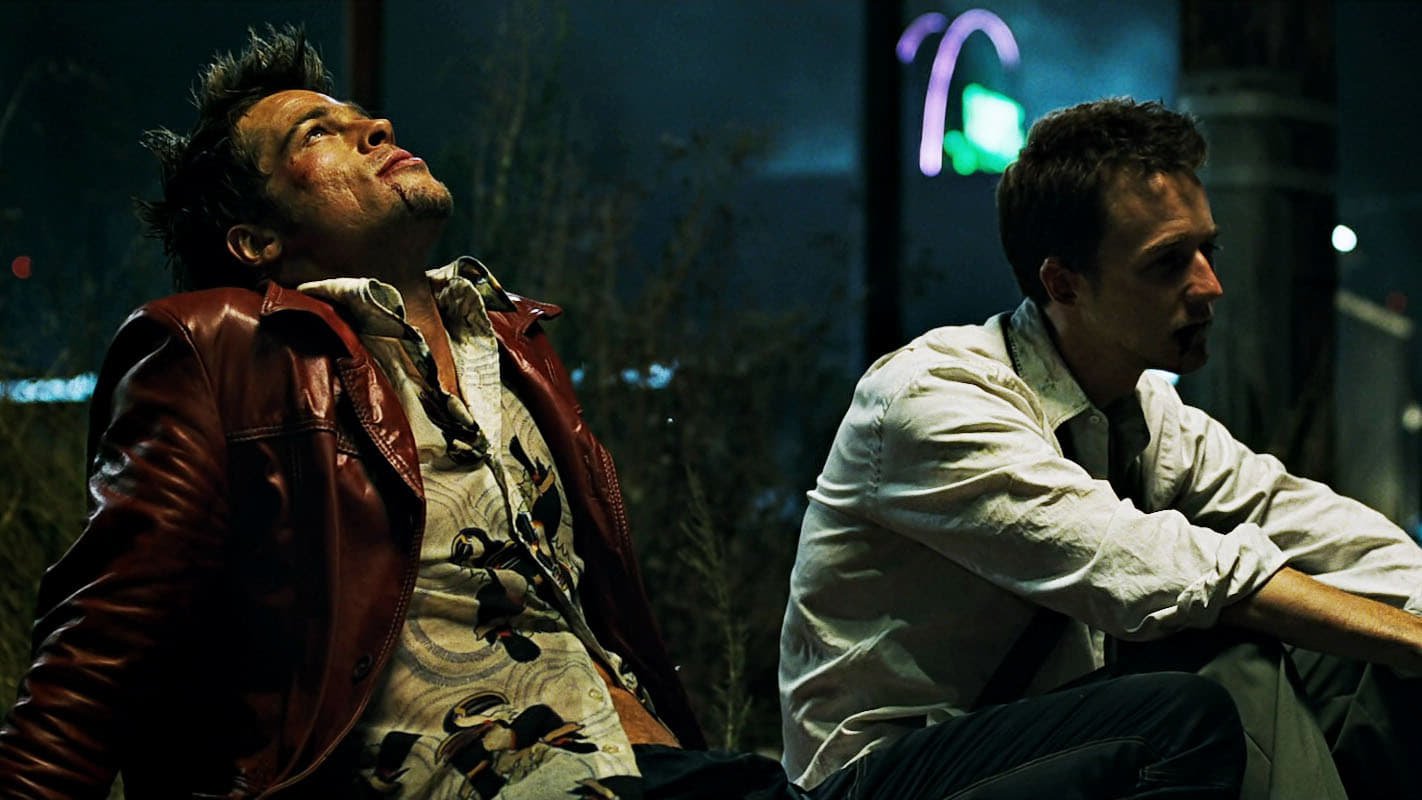
David Fincher’s Fight Club flopped on release in 1999 before becoming one of the most influential and misunderstood films of its generation. The ending twist recontextualizes everything that came before, but its implications go deeper than a simple identity reveal.
If you’re processing what you just watched, let’s break it down.
The Twist: Tyler Durden Is Not Real
The Narrator, never named in the film, has dissociative identity disorder. Tyler Durden is his alter ego, a projection of everything he wishes he could be. Every scene with Tyler is actually the Narrator acting alone or imagining conversations with himself.
Watch again and you’ll see the clues. Tyler appears in single frames before his “introduction.” The Narrator’s phone call to Tyler shows only one person on the line. Hotel clerks and bartenders interact with only one of them. Marla calls the Narrator “Tyler” repeatedly, which he dismisses as confusion.
The personalities split when the Narrator could no longer reconcile his consumer-driven emptiness with his desire for meaning. Tyler is the id unleashed, free from social constraints, capable of violence and chaos that the Narrator’s conditioned self would never allow.
Tyler as Wish Fulfillment
Tyler represents masculine fantasy: confident, physically perfect, sexually liberated, unconstrained by rules or consequences. He says what the Narrator thinks. He does what the Narrator wants.
But Tyler is also a critique of that fantasy. His philosophy, reduced to bumper stickers about hitting bottom and destroying beautiful things, sounds profound but leads to fascism. Project Mayhem’s discipline, its uniforms, its dehumanization of members (“In death, a member of Project Mayhem has a name”) mirrors the very systems Tyler claims to oppose.
The Narrator creates Tyler to escape consumer culture but builds something worse: a cult of personality that erases individual identity entirely. The “freedom” Tyler offers is just another kind of slavery.
The Soap Business
Tyler’s signature product, soap made from human fat stolen from liposuction clinics, crystallizes the film’s themes. The wealthy dispose of their excess flesh, which Tyler transforms into luxury soap sold back to them.
“We were selling rich women their own fat asses back to them,” Tyler explains. It’s capitalism eating itself, literally. The metaphor is crude but effective.
Marla Singer
Marla is the only character who sees the Narrator clearly, which is why she terrifies him. She attends the same support groups he does, reflecting his own fraudulence back at him. She calls out his contradictions. She refuses to participate in his self-deception.
The Narrator’s inability to be intimate with Marla while Tyler has a passionate affair with her illustrates the split. The parts of himself he’s rejected (confidence, desire, honesty) are what Marla responds to. His authentic self is locked away.
Project Mayhem’s Goals
Tyler’s plan involves erasing debt by destroying the buildings housing credit card company records. With no records, everyone’s debt is forgiven. Society resets to zero.
It’s a seductive idea that falls apart under scrutiny. Destroying records doesn’t eliminate debt. It creates chaos that would hurt the vulnerable most. The credit companies would rebuild, probably with more authoritarian safeguards. Tyler’s revolution is adolescent fantasy dressed up as philosophy.
The film knows this. Fincher isn’t endorsing Tyler’s plan. He’s showing how easily men seeking meaning can be radicalized into violence, how charismatic leaders exploit alienation.
The Ending
The Narrator finally rejects Tyler by shooting himself through the cheek, destroying the part of his brain where Tyler “lives.” He survives. Tyler doesn’t.
Marla arrives, brought by Project Mayhem members. The Narrator takes her hand and watches as the credit card buildings collapse around them. “You met me at a very strange time in my life,” he says.
It’s ambiguous whether this is victory or defeat. The bombs still went off. People may have died. The Narrator has integrated his personalities but is now a terrorist. The hand-holding suggests hope, but the destruction suggests consequences.
The Pixies and the Final Frame
As the buildings fall, the Pixies’ “Where Is My Mind?” plays. The song choice is perfect: it’s about dissociation, about watching yourself from outside, about the disconnect between thought and reality.
A subliminal penis flash, Tyler’s signature prank, appears in the final frame. Even “dead,” Tyler gets the last word. The Narrator may have integrated, but Tyler’s influence shaped who he became.
Misreadings and Warnings
Fight Club has been misread as an endorsement of Tyler’s philosophy. Some viewers miss the critique, seeing only the charisma. Fincher was aware of this risk but trusted audiences to see the full picture.
The film is actually a warning about how empty masculinity and consumer alienation create vulnerability to extremism. Tyler offers belonging, purpose, and enemies to fight. It’s the structure of radicalization, whether political, religious, or ideological.
Today, with online spaces full of Tyler Durden logic, the film feels more relevant than ever. The dissatisfaction is real. The solutions offered by charismatic extremists are not.
Fincher’s Vision
Fincher brings his precise, controlled style to material that’s deliberately chaotic. The subliminal frames, the unreliable editing, the direct address to camera all create unease that mirrors the Narrator’s fractured mind.
He would continue exploring obsession and identity in films like Zodiac and Gone Girl, but Fight Club remains his most provocative work, a film that challenges viewers to recognize themselves in its critique.
For more films about unreliable narrators and fractured identity, see our analysis of Memento and explore our thriller collection.
Discover Your Next Favorite Film
Browse our curated collection of movie trailers and find something new to watch tonight.
Browse Trailers