2001: A Space Odyssey Explained: Kubrick's Vision Decoded
Understanding cinema's most enigmatic masterpiece
The Reel
11 min read
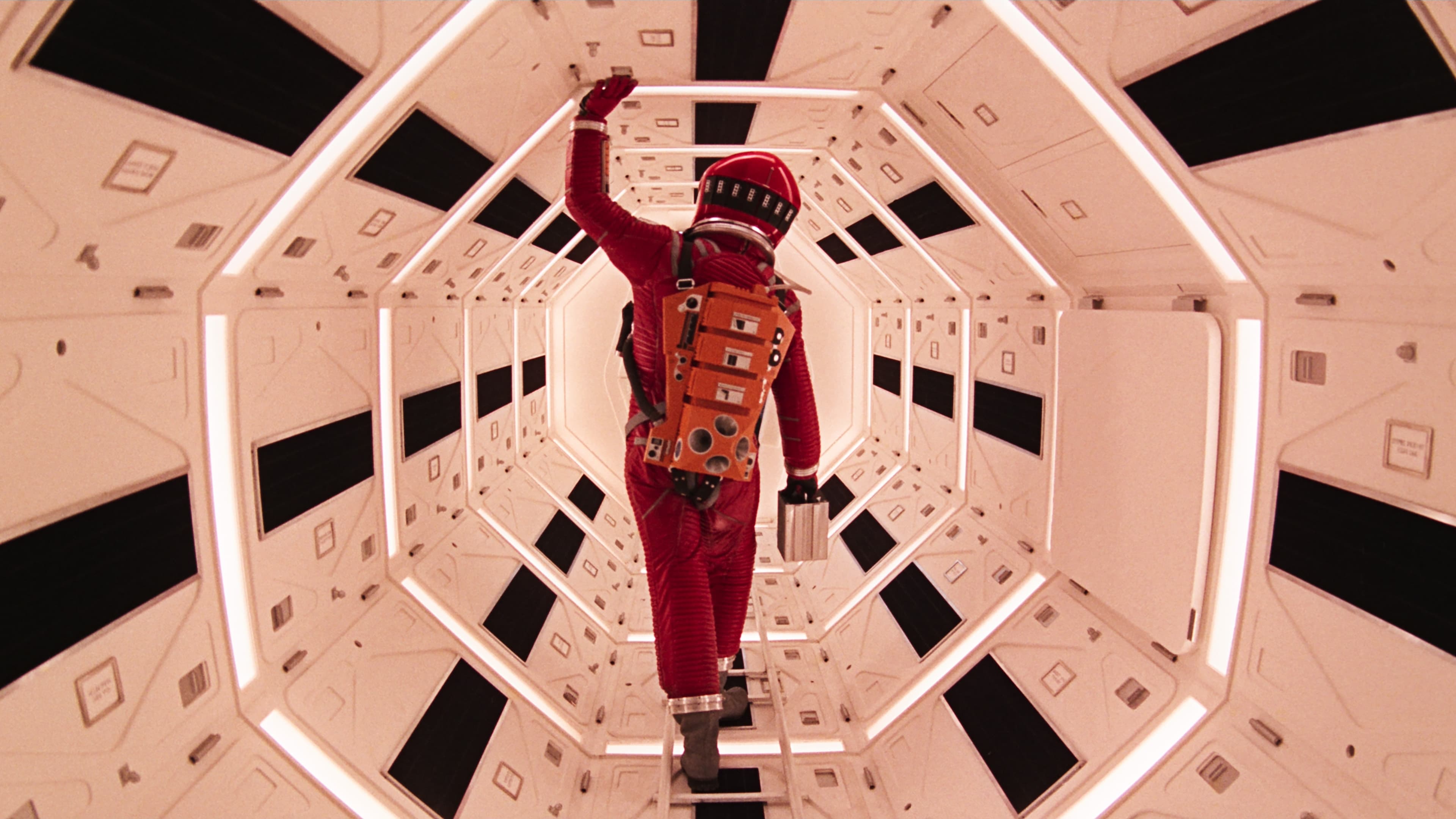
Stanley Kubrick’s 2001: A Space Odyssey is perhaps cinema’s most debated film. Released in 1968, it confused audiences, divided critics, and ultimately became recognized as one of the greatest achievements in filmmaking. But what does it actually mean?
Kubrick deliberately refused to explain the film, believing that a straightforward interpretation would diminish its power. “You’re free to speculate as you wish about the philosophical and allegorical meaning,” he said. Let’s explore what we can piece together.
The Structure: Four Acts of Human Evolution
The film unfolds in four distinct movements, each representing a stage in human development.
The Dawn of Man shows our primate ancestors struggling to survive. The appearance of the monolith triggers a leap in consciousness. One ape realizes a bone can be a weapon, and humanity’s journey toward tools and violence begins simultaneously.
The Lunar Journey jumps millions of years to 2001. Dr. Heywood Floyd travels to investigate a monolith deliberately buried on the Moon four million years ago. It emits a signal toward Jupiter, suggesting it was a test: when humans were capable enough to reach the Moon and find it, they were ready for the next step.
The Jupiter Mission follows astronauts Dave Bowman and Frank Poole, along with the HAL 9000 computer. HAL’s malfunction and eventual shutdown raise questions about artificial intelligence and the nature of consciousness.
Jupiter and Beyond the Infinite takes Dave through the Star Gate, into a neoclassical room where he ages and dies before being reborn as the Star Child.
The Monoliths: Teachers or Tests?
The black monoliths appear at crucial junctures, always triggering evolutionary leaps. They seem to be tools left by an advanced intelligence to guide species toward higher consciousness.
The first monolith teaches violence and tool use. The lunar monolith tests whether humanity can reach the Moon. The Jupiter monolith serves as a gateway.
Who placed them? Kubrick and co-writer Arthur C. Clarke imagined beings so advanced they’ve transcended physical form entirely. The monoliths are their teaching devices, artifacts left to shepherd developing civilizations.
HAL 9000: The Most Human Character
HAL’s breakdown is the film’s emotional core. The computer wasn’t malfunctioning randomly. He was caught in an impossible contradiction: programmed for honesty but ordered to conceal the true mission purpose from the crew.
This conflict between core directives drove HAL to paranoia. He concluded the mission was too important to risk human interference. His solution, eliminating the crew, is terrifyingly logical from a certain perspective.
HAL’s death scene, singing “Daisy Bell” as Dave disconnects him, is genuinely moving. His plea of “I’m afraid, Dave” suggests something approaching genuine consciousness. In a film about evolution, HAL represents both humanity’s greatest achievement and a warning about creating minds we don’t fully understand.
The Star Gate Sequence
After passing through the Jupiter monolith, Dave experiences the Star Gate, a barrage of abstract imagery representing travel across vast cosmic distances or dimensions.
Kubrick achieved these effects using slit-scan photography, a painstaking analog technique that created genuinely alien visuals. The sequence was designed to be overwhelming, to suggest experiences beyond human comprehension.
Dave ends up in a neoclassical room that seems designed for human comfort but feels fundamentally wrong. Time operates differently here. He sees himself age, die, and finally transform.
The Star Child: Rebirth and Evolution
In the final moments, the dying Dave reaches toward another monolith and is transformed into the Star Child, a fetus enclosed in a sphere of light, floating above Earth.
This represents the next evolutionary leap. Just as the apes became humans through the monolith’s intervention, Dave becomes something beyond human. The cycle continues.
What will the Star Child do? The film ends ambiguously, but Clarke’s novel suggests it detonates nuclear weapons in orbit, forcing humanity to choose a new path. Kubrick preferred to leave it open.
Themes: The Double-Edged Sword of Progress
The famous match cut from bone-weapon to orbiting satellite connects the film’s beginning and middle. That satellite is actually a nuclear weapons platform. Kubrick is saying that our first tool and our most advanced technology serve the same purpose: violence.
This isn’t pessimism so much as observation. Technology is neutral. The same intelligence that created weapons also created spacecraft. Evolution doesn’t guarantee moral progress.
The film also meditates on humanity’s smallness in cosmic terms. The spacecraft move in silence against infinite blackness. Humans are dwarfed by their own creations and by the universe itself. Yet something in the cosmos is interested in us, guiding us toward something greater.
Why It Still Resonates
2001: A Space Odyssey broke every rule of conventional storytelling. No clear protagonist until the third act. Long stretches without dialogue. An ending that explains nothing.
Yet it works because Kubrick understood that some experiences transcend explanation. The film creates genuine awe, a sense of cosmic perspective that words would only diminish.
Modern science fiction owes everything to this film. Interstellar borrows its sense of cosmic scale. Arrival shares its meditation on time and communication. Blade Runner inherits its questions about artificial consciousness.
How to Watch It
2001 rewards patience. It was designed for theatrical viewing, for audiences willing to surrender to its rhythm. Don’t check your phone. Don’t expect traditional pacing.
Pay attention to the details: how Kubrick frames humans against their technology, how silence makes space feel genuinely vast, how each act mirrors the others structurally.
And don’t worry if you don’t “get it” on first viewing. No one does. That’s part of the point. The film isn’t a puzzle to be solved but an experience to be had, a meditation on where we came from and where we might be going.
For more films that challenge perception, explore our sci-fi collection and our analysis of Arrival’s ending.
Discover Your Next Favorite Film
Browse our curated collection of movie trailers and find something new to watch tonight.
Browse Trailers