Memento Explained: Putting the Pieces Together
How Nolan's reverse narrative reveals a devastating truth
The Reel
10 min read
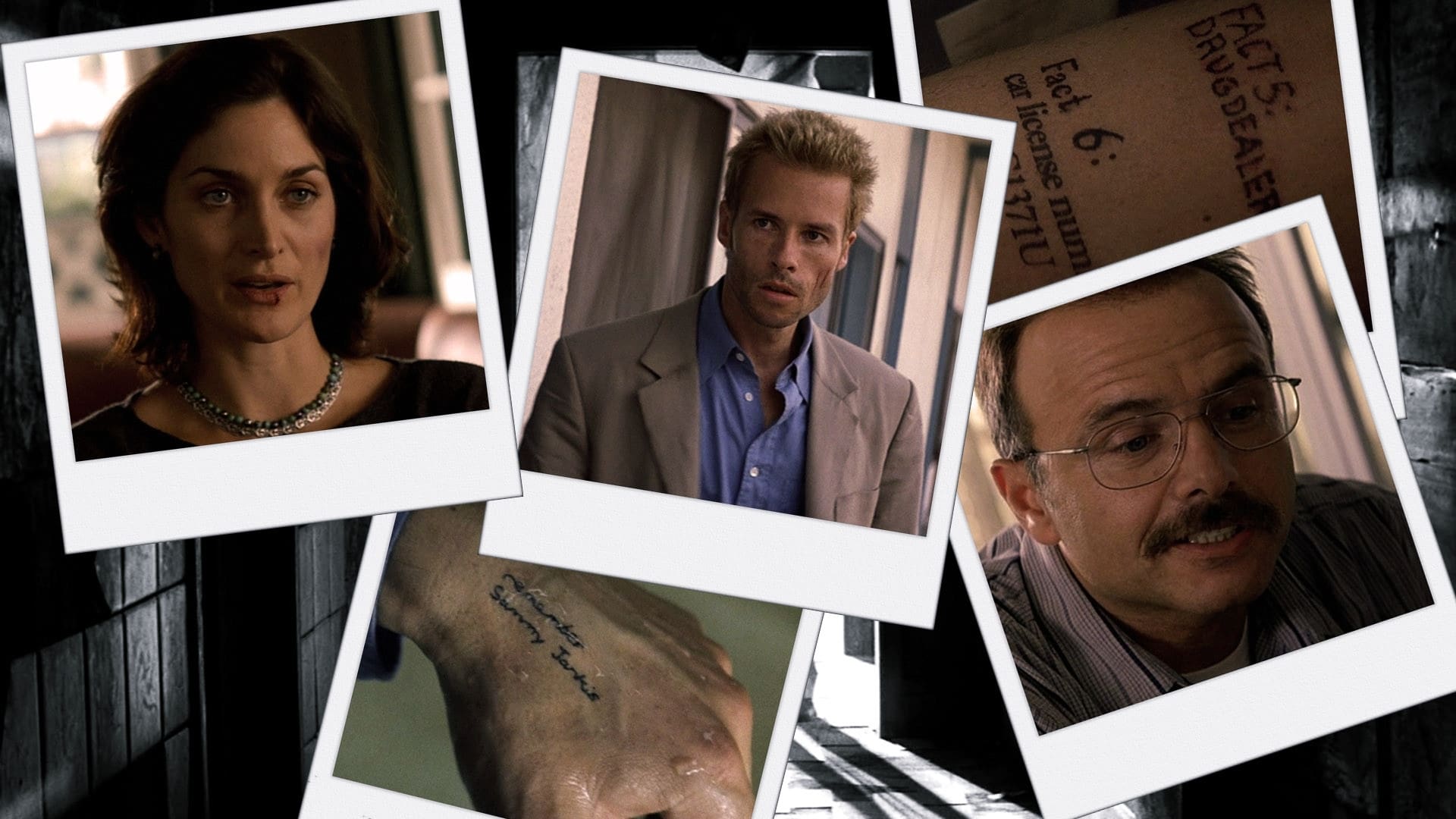
Christopher Nolan’s breakthrough film Memento isn’t just told in reverse chronological order. It’s a carefully constructed puzzle that forces viewers to experience the same disorientation as its protagonist. By the time we reach the “end” (which is actually the beginning), the film has fundamentally challenged everything we believed about its hero.
If you’ve just finished watching and feel like your brain has been scrambled, here’s how all the pieces fit together.
The Structure
Memento operates on two timelines that converge in the middle:
Color sequences run backward, showing Leonard’s investigation into his wife’s murder. Each scene ends where the previous one began.
Black and white sequences run forward, showing Leonard in a motel room, talking on the phone and explaining his condition.
The two timelines meet at the film’s midpoint, which is actually the chronological ending. This moment reveals the truth Leonard has been hiding from himself.
Leonard’s Condition
Leonard Shelby (Guy Pearce) has anterograde amnesia, meaning he cannot form new memories. Everything since his wife’s attack fades within minutes. He uses photographs, notes, and tattoos to maintain continuity.
This condition makes him the perfect unreliable narrator. He can’t remember his own lies, his own manipulation, or his own past actions. He’s perpetually starting fresh, which means we’re perpetually uncertain.
What Really Happened
The chronological truth, revealed when the timelines merge:
Leonard’s wife survived the attack that gave him brain damage. She didn’t believe he was truly impaired and tested him by having him administer her insulin shots repeatedly. His repeated doses killed her.
Leonard was the one who killed his wife. Not a mysterious “John G.” Not a home invader. Leonard’s condition made him dangerous, and his wife paid the price.
The “Sammy Jankis” story Leonard tells throughout the film is actually his own story, with key details changed. The brief insert shot of Leonard in the institution chair, replacing Sammy, confirms this.
Teddy’s Truth
In the chronological ending (the film’s opening scene), Leonard kills Teddy. But Teddy isn’t the villain.
Teddy was a cop who actually helped Leonard find and kill the real John G. (Jimmy Grants’ drug dealer associate) over a year before the film’s events. But Leonard’s condition means he can’t remember achieving his goal. So Teddy has been feeding him new targets, new “John G.” suspects, giving Leonard purpose.
In the critical scene where the timelines merge, Teddy tells Leonard the truth: he’s already had his revenge. Multiple times. Leonard has killed several “John G.” suspects, always forgetting afterward, always starting the hunt again.
Leonard’s Choice
Here’s the most disturbing revelation: Leonard isn’t just a victim of his condition. He’s actively choosing to deceive himself.
When Teddy reveals the truth, Leonard makes a conscious decision. He writes “Don’t believe his lies” on Teddy’s photo and writes down Teddy’s license plate as the next “John G.” clue. He knows he’ll forget this conversation. He knows his future self will trust the notes. He deliberately sets up Teddy to be his next victim.
Leonard wants to keep hunting. The quest for revenge gives his existence meaning. Without it, he’s just a man who killed his wife and can’t form new memories. The mystery is preferable to the truth.
The Self-Deception Loop
Memento reveals that Leonard has done this before. The system of notes and photos that seems so reliable is actually a tool for self-manipulation. He can write whatever he wants and his future self will believe it.
When Leonard says “I have to believe in a world outside my own mind,” he’s articulating his philosophy of faith in his system. But the system is built on lies he told himself and can’t remember telling.
Themes of Memory and Identity
Nolan would explore similar territory in Inception, The Prestige, and Interstellar, always questioning the nature of perception and self. Memento argues that identity depends on memory, and without reliable memory, we can become strangers to ourselves.
The film also questions whether we’re all doing what Leonard does: constructing narratives that serve our emotional needs rather than reflecting objective truth. We all edit our memories. Leonard just does it more obviously.
The Tattoos
Leonard’s tattoos are supposed to be permanent truths he can trust. But even these are suspect:
“John G. raped and murdered my wife.” But did a “John G.” murder her, or did Leonard’s repeated insulin injections?
“REMEMBER SAMMY JANKIS.” But Sammy’s story is Leonard’s story, disguised.
The only tattoo we see him getting during the film is “Never answer the phone,” which he gets after Teddy calls him at a motel. Small decisions become permanent facts become unquestionable truths.
Why the Reverse Structure Matters
Telling the story backward isn’t a gimmick. It puts us in Leonard’s position. Each scene starts without context, and we have to piece together what’s happening using clues. We never have full information. We’re always catching up.
By the time we understand the full truth, we’ve already invested in Leonard as a sympathetic protagonist. The structure forces us to reckon with how easily we accept narratives that confirm what we want to believe.
Unanswered Questions
Did Leonard know the truth when he set up Teddy? The film suggests he had a moment of clarity before deliberately choosing to forget. But can we trust even that interpretation?
How many “John G.” suspects has Leonard killed? Teddy implies multiple, but Teddy also has reasons to lie.
Was there ever a real John G.? The evidence points to yes, that someone did attack Leonard and his wife. But Leonard has turned that traumatic incident into an endless loop of vengeance.
The Final Image
The film ends (chronologically begins) with Leonard driving away from Teddy’s murder, narrating about how we all need mirrors to remind ourselves who we are. The camera lingers on a photograph developing, an image slowly emerging from blankness.
That’s Memento’s lasting metaphor: memory as a photograph, something we think is objective but is actually framed, selected, and interpreted. The truth exists somewhere, but we can only ever see our version of it.
For more films that challenge perception and play with narrative structure, browse our thriller collection.
Discover Your Next Favorite Film
Browse our curated collection of movie trailers and find something new to watch tonight.
Browse Trailers