Everything Everywhere All at Once: How to Do the Multiverse Right
The Daniels turned a mid-budget indie into an Oscar-sweeping phenomenon by making the infinite feel personal
The Reel
7 min read

In 2022, the multiverse was everywhere. Marvel gave us variant Lokis and crumbling realities. DC promised Flash-powered timeline shenanigans. Even Disney couldn’t resist, sending teenage witches bouncing between dimensions.
And then Everything Everywhere All at Once arrived. A $25 million film made by two directors known for a farting corpse movie. And it showed everyone else how it’s done. Where the Spider-Verse films proved multiverse stories could be visually revolutionary, the Daniels proved they could be emotionally devastating.
The difference? While the blockbusters used infinite realities to make everything feel bigger, the Daniels used them to make everything feel smaller. More personal. More true.

The Unlikely Hero
Evelyn Wang is not special. That’s the point.
When we meet her, she’s drowning: in tax documents, in a failing laundromat, in a marriage that’s lost its spark, in a daughter who’s slipping away. Michelle Yeoh plays her with shoulders permanently hunched against disappointment. This is a woman who has spent so long being practical that she’s forgotten what it feels like to dream.
Then the multiverse opens, and Evelyn learns a terrible truth: in the infinite branches of possibility, she is the biggest failure. Every other Evelyn made better choices, became someone greater. Movie star Evelyn. Kung fu master Evelyn. Award-winning chef Evelyn.
But here’s the twist that makes the film genius: it’s precisely because our Evelyn is the biggest failure that she can save everything. She’s the only one with nothing left to lose, the only one who’s suffered enough to understand the villain’s nihilism. And the only one with enough unexplored potential to access every other version of herself.
Michelle Yeoh’s Career-Defining Performance
We’ve watched Michelle Yeoh do incredible things for four decades. Motorcycle jumps in Supercop. Sword fights in Crouching Tiger. Quiet dignity in Crazy Rich Asians. None of it prepared us for Evelyn Wang.
The role requires Yeoh to play dozens of variants, each subtly different. A flicker in the eyes, a shift in posture. She must be a frumpy laundromat owner and a glamorous movie star and a sign-language-speaking hibachi chef and a version of herself with hot dogs for fingers. Each transformation is total and instantaneous.
But the real magic happens in the quiet moments. Watch Yeoh’s face when Evelyn first glimpses what her daughter could become. Watch her collapse into Waymond’s arms at the end, finally allowing herself to be held. After decades of superhuman action heroics, Yeoh’s greatest performance turns out to be about a mother learning to say “I love you.”
Ke Huy Quan’s Comeback for the Ages
The return of Ke Huy Quan (Short Round himself, vanished from screens for over two decades) would be a heartwarming story even if the performance were merely adequate. It’s not. It’s extraordinary.
Quan plays Waymond Wang in three registers. There’s the meek husband in the main timeline, perpetually optimistic despite everything. There’s the hardened warrior from the “Alpha” universe, capable and commanding. And there’s the version in between, the one who shows us Waymond’s philosophy isn’t weakness but radical courage.
“When I choose to see the good side of things, I’m not being naive,” Waymond tells Evelyn. “It is strategic and necessary. It’s how I’ve learned to survive through everything.”
In a film full of virtuoso kung fu, Waymond’s weapon is kindness. His googly eyes, stuck on people’s foreheads to make them smile, save the multiverse. Quan plays all of this without a trace of irony, and somehow it works. Somehow it’s the most moving thing in the movie.
The Daniels’ Maximalist Masterpiece
Daniel Kwan and Daniel Scheinert (collectively, “the Daniels”) previously made Swiss Army Man, a film where Daniel Radcliffe plays a farting corpse. They bring the same anarchic energy here, but in service of genuine emotion.
The filmmaking is relentlessly inventive. A fight scene where combatants gain powers by doing increasingly absurd things (eating chapstick, giving yourself paper cuts, inserting a trophy where trophies shouldn’t go). An entire subplot in a universe where humans evolved with hot dogs instead of fingers. A romantic climax between two rocks on a cliff.
It should be exhausting. It should be annoying. Instead, it’s exhilarating. Each bizarre choice supports the film’s central argument that meaning exists everywhere, in everything, if we’re willing to see it.
Stephanie Hsu and Generational Trauma
As Joy/Jobu Tupaki, Stephanie Hsu has the most difficult role in the film. She must be terrifying and sympathetic, a cosmic threat and a wounded child. The villain’s motivation isn’t world domination; it’s the unbearable weight of experiencing everything simultaneously and concluding that nothing matters.
Jobu is depression personified, nihilism given form. Her everything bagel, a black hole made of every possible thing, is what happens when connection becomes impossible. She’s not trying to destroy the universe; she’s trying to find someone who understands why she wants to disappear.
That someone, of course, is her mother. The resolution isn’t a fight but a conversation. Not even that, really. A choice. An embrace. A willingness to stay present in a relationship that’s hard, with a person who doesn’t always understand you, because the alternative is the everything bagel. It’s the kind of quiet emotional truth that Past Lives also captures so beautifully.
The Chaos Has a Heart
Everything Everywhere All at Once shouldn’t work. It’s too long, too weird, too ambitious for its budget. It mixes toilet humor with genuine philosophy, martial arts with family drama, cosmic horror with romantic comedy.
But the Daniels understand something the bigger multiverse movies don’t: infinite possibilities only matter if we care about one person’s specific journey through them. The stakes aren’t “reality will collapse.” The stakes are “will this mother and daughter reconcile before it’s too late?”
That focus keeps the chaos grounded. No matter how strange things get (and they get very strange), we never lose sight of Evelyn’s actual quest: to connect with Joy before they lose each other for good.
Oscar Night, Earned
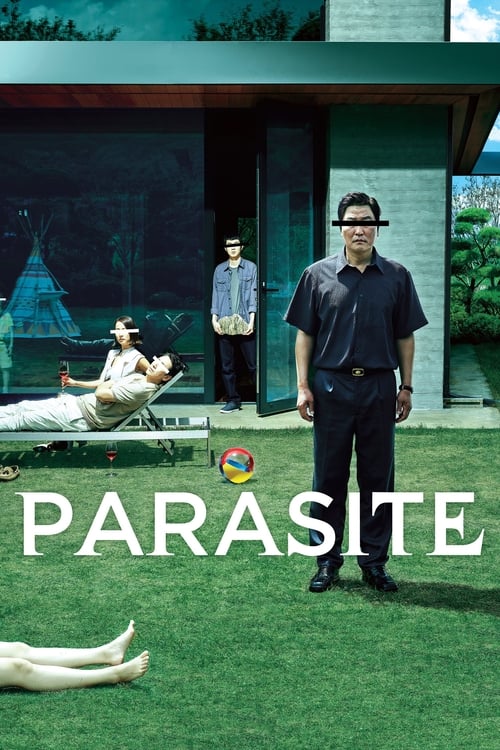
In a year that also gave us Top Gun: Maverick and Avatar: The Way of Water, the Academy gave Best Picture to a film about a middle-aged Chinese immigrant fighting raccoons and having a romance as a rock. Following Parasite’s historic win, it was another statement that Hollywood’s highest honor could go to genuinely weird, boundary-pushing cinema. It’s one of the best decisions they’ve ever made.
Everything Everywhere All at Once is what happens when filmmakers trust their audience completely. Trust them to follow absurdist tangents, trust them to find meaning in silliness, trust them to feel the emotion underneath the chaos. It’s a film about the multiverse that’s really about the terrifying, beautiful act of being present with the people you love.
In infinite universes, there’s a version of this review that captures everything the film achieves. This isn’t that version. But that’s okay. The joy is in the trying.
Rating: 10/10
Everything Everywhere All at Once won seven Academy Awards, including Best Picture, Best Director, Best Actress, and Best Supporting Actor. Explore more award-winning films in our collection.
Discover Your Next Favorite Film
Browse our curated collection of movie trailers and find something new to watch tonight.
Browse Trailers